Research-based. We haven’t pulled these shots ourselves. The steps and numbers below come from the Specialty Coffee Association (SCA), Breville’s US instruction book, roaster brew guides, and the makers of the moka pot, AeroPress and Flair, all listed under “Sources” at the end. Where sources give different numbers, we show the range.
Espryo is reader-supported. When you buy through our links, we may earn a commission. Learn more
Espresso is a small, concentrated coffee made by forcing hot water through a tightly packed bed of finely ground coffee at high pressure. Making it at home comes down to five steps: dose, grind, distribute, tamp and pull. The rest is adjusting one thing at a time until the shot tastes right.
Quick answer: Weigh about 18 g of freshly ground coffee into a double basket, spread it evenly, tamp it level, and pull the shot until you have about 36 g in the cup, a 1:2 ratio. Aim for roughly 25–30 seconds. If it runs fast and tastes thin, grind finer. If it drips and tastes harsh, grind coarser.
In this guide
Keep · Adjust · Upgrade
| Our verdict | |
|---|---|
| Keep | Start with what came with your machine: its tamper, its baskets and its suggested grind setting. Breville’s method, for example, uses only what’s in the box. |
| Adjust | Weigh your coffee in and your espresso out. In the 2017 Barista Guild of America survey reported by the SCA, 82% of baristas measured espresso by weight. |
| Upgrade | A burr grinder that reaches espresso fineness. Fresh, consistent grounds matter more than almost anything else on this list. |
What is espresso, exactly?
The SCA‘s heritage definition, reprinted in its 25 magazine, describes espresso as a 25–35 ml (0.85–1.2 oz) drink made from 7–9 g of coffee (14–18 g for a double), with water at 195–205°F (90.5–96.1°C) “forced at 9–10 atmospheres of pressure,” and a brew time of 20–30 seconds.
Modern practice has moved on a little. The same article reports that 66% of baristas surveyed dosed 18–20 g, and that the average ratio was 1:2. Treat the old definition as background and the numbers below as your starting point.
The pressure part matters for the “without a machine” section later. Methods that don’t reach that kind of pressure make strong, concentrated coffee, but not true espresso.
What you’ll need
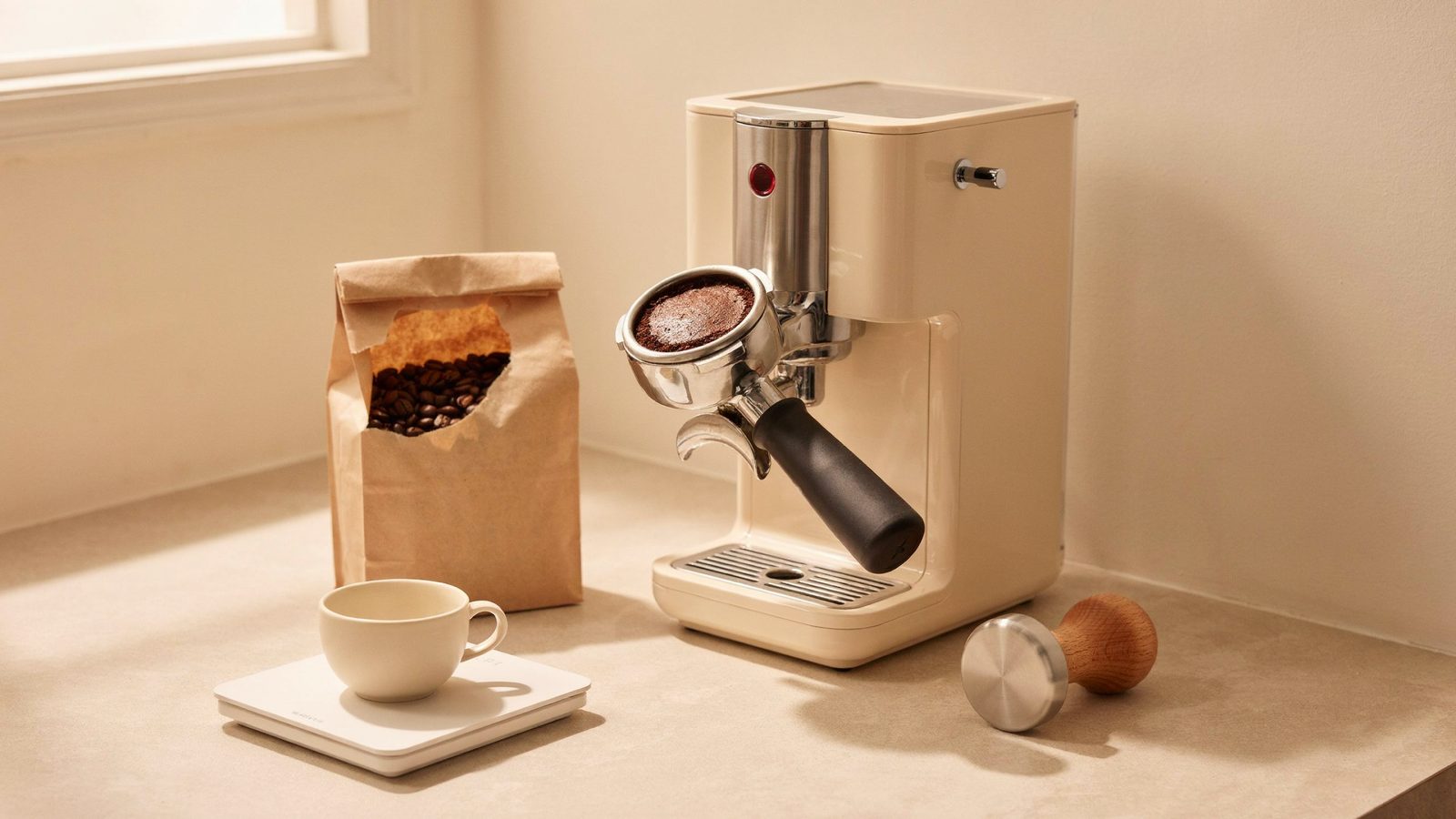
You need a machine, a grinder and fresh beans. A scale and a proper tamper make it repeatable.
How to make espresso with a machine: step by step
1Heat up and purge
Turn the machine on and let it reach temperature, with the portafilter locked in so it heats too. Pact Coffee’s brew guide starts with a clean machine and a quick purge, running water through the group head before you lock in the coffee. Breville’s Barista Express book also says to run hot water through the empty basket after each shot to prevent blockages.
2Dose
Weigh your coffee. A good starting dose for a double basket is 18 g. Breville’s current Barista Express book suggests 16–19 g for its 2 CUP basket and 8–11 g for the 1 CUP basket, so check what your own basket is designed to hold. The SCA survey found most baristas dosed between 18 and 20 g.
No scale yet? Pact Coffee’s guide says to fill the basket to the top. Breville’s visual check is that, after tamping, the metal cap of its tamper should sit level with the top of the basket.
3Grind
Grind just before you brew. The SCA‘s “Coffee Decoded” column says ground coffee can be considered fresh for only about an hour, because the gas that keeps it fresh escapes in minutes once ground.
Espresso needs a fine grind. Coava Coffee describes it as “fine but not so fine that it becomes powdery.” Breville warns that if grounds feel “like flour when rubbed between fingers,” water won’t flow even under pressure. Start at your grinder’s suggested espresso setting. Breville, for example, suggests setting 5 on the Barista Express.
4Distribute
Spread the grounds evenly across the basket. Pact Coffee says to level them, or tap the side of the portafilter if you don’t have a tool, and warns that uneven distribution causes channeling, where water “takes the path of least resistance.” A WDT tool or a distribution tool makes this more consistent. Both are optional.
5Tamp
Press the grounds into a flat, level puck. Breville’s advice is the one to remember: “The amount of pressure is not as important as consistent pressure every time.” Its two book editions give different targets, 30–40 lb in the older one and 22–33 lb in the current one, which shows how flexible the number is.
Wipe any grounds off the rim so the portafilter seals properly, then lock it into the group head.
6Pull the shot
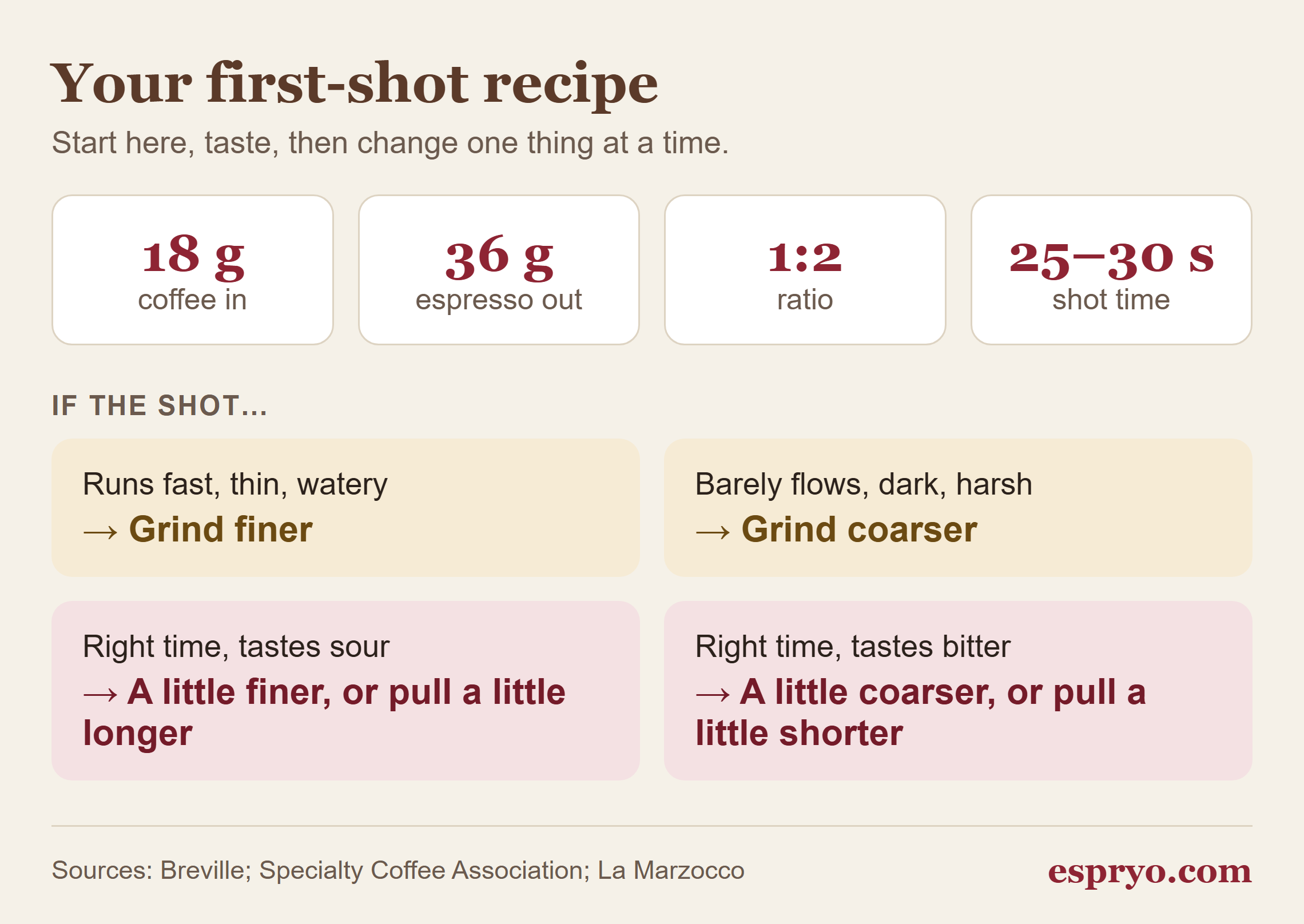
Put your cup on the scale, tare it, and start the shot. A common starting recipe, used in Pact Coffee’s guide, is:
| Variable | Starting point |
|---|---|
| Dose | 18 g |
| Yield (espresso out) | 36 g |
| Ratio | 1:2 |
| Time | 25–30 seconds |
This matches the averages in the SCA‘s survey report. In it, the average ratio was 1:2 and 51% of baristas’ average shot times fell between 25 and 30 seconds. Breville’s current Barista Express book gives the same 25–30 second window.
Stop the shot when you reach your target weight. Breville describes a well-running shot as flowing “slow like warm honey” with a golden brown crema. Curious about the foam? Our what is crema guide explains what it does and doesn’t tell you.
7Taste and adjust one thing
This is where most of the learning happens. Change one variable per shot, as Breville’s manual says. Our guides to bitter espresso and sour espresso go deeper.
| What you see and taste | Likely cause | First change |
|---|---|---|
| Runs fast, gushes, thin and watery | Grind too coarse, or too little coffee | Grind finer |
| Drips or barely flows, dark and harsh | Grind too fine, or too much coffee | Grind coarser |
| Right time, but tastes sour | Under-extracted | Grind a little finer, or pull a little longer |
| Right time, but tastes bitter | Over-extracted | Grind a little coarser, or pull a little shorter |
Recipes vary by roast and taste. Coava Coffee’s own espresso guide uses about 19 g in and 26 g out in 24–28 seconds, a shorter ratio than 1:2. The SCA survey’s range ran from 1:1.5 to 1:2.5. Start at 1:2, then move toward what you like.
If you have a Breville machine with a pressure gauge, our Barista Express pressure gauge guide shows how to read it alongside these changes.
8Clean up
Knock out the puck, rinse the basket and wipe the group head. Our how to clean an espresso machine guide covers the daily and weekly jobs.
Making milk drinks
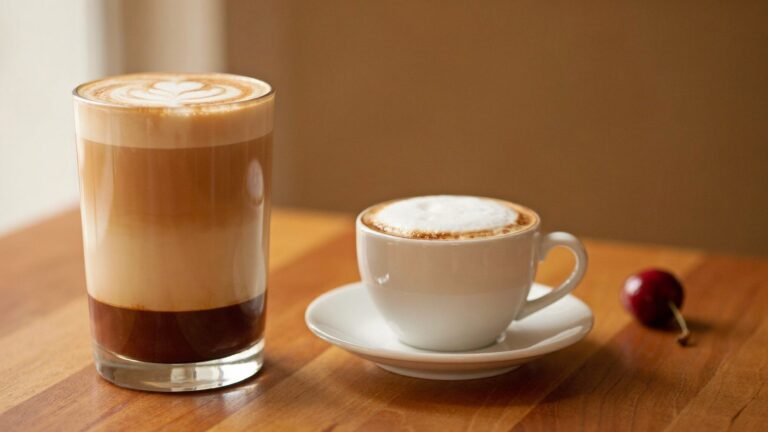
Once you have a shot you like, milk drinks are the next step. Steam milk in a pitcher with your machine’s steam wand, or use a separate frother. Our best milk frother guide covers the options, and latte vs cappuccino explains how the two classic drinks differ.
How to make espresso without a machine
A moka pot or an AeroPress makes strong, espresso-style coffee, but neither reaches the pressure in the SCA definition above; a manual lever press, such as the Flair Classic, can. Our guide to making espresso without a machine gives each maker’s own method, step by step.
Moka pot
- Pressure: below the SCA espresso definition
- How it brews: on the stove
- Example: Bialetti Moka Express
AeroPress
- Pressure: below the SCA espresso definition
- How it brews: pressed by hand
- Example: AeroPress Original
Manual lever press
- Pressure: can reach espresso pressure
- How it brews: lever, by hand
- Example: Flair Classic
Gear checklist
| Item | Must-have or nice-to-have |
|---|---|
| Espresso machine (or lever press) | Must-have for true espresso |
| Burr grinder for espresso | Must-have unless you buy pre-ground |
| Fresh beans with a roast date | Must-have |
| Scale | Strongly recommended |
| Tamper sized to your basket | Strongly recommended if yours is plastic or loose |
| WDT or distribution tool | Nice-to-have |
| Milk pitcher or frother | For milk drinks |
| Cleaner and descaler | For upkeep |
Most items link to a buying guide in “What you’ll need” above.
If you buy pre-ground coffee, use your machine’s pressurized (dual wall) basket. Breville says those baskets “regulate the pressure” and help the extraction “regardless of the grind, dose, tamp pressure or freshness.”
FAQ
What numbers should I use for my very first shot?
Start around 18 g of coffee in and about 36 g of espresso out, then change one thing at a time. Our espresso ratio guide explains how dose, yield and time work together.
My shot ran much faster or slower than expected. What now?
Adjust the grind before anything else: finer slows the shot, coarser speeds it up. Many home recipes aim for roughly 25–30 seconds, and the espresso grind size guide walks through the fixes.
Is a moka pot or AeroPress a good first step before buying a machine?
They’re an inexpensive way to enjoy strong, espresso-style coffee, but they don’t reach espresso pressure, so the result tastes different. If you want to start there, our guide to making espresso without a machine compares the options.
Do I need a grinder to make espresso at home?
Not strictly, but it helps a lot. The SCA says ground coffee stays fresh for only about an hour. With pre-ground coffee, use a pressurized basket.
How much coffee goes in a double shot?
Usually 16–20 g. Breville suggests 16–19 g for its 2 CUP basket, and most baristas in the SCA-reported survey dosed 18–20 g. Check the size printed on your basket.