
Research-based. We haven’t tested these grinders ourselves. This guide is built from manufacturer pages, Amazon US listings and major coffee retailers, with sources listed at the end. Where sources disagree, we give both figures, and anything we couldn’t confirm is left out or flagged.
Espryo is reader-supported. When you buy through our links, we may earn a commission. Learn more
Espresso asks more of a grinder than any other brew method. The grind has to be very fine, and tiny changes move your shot time by several seconds. A grinder that’s great for pour-over can run out of fine adjustment right where espresso needs it.
This guide is for people who make espresso most days. It looks at the things that matter for espresso specifically: how finely the grinder adjusts, whether it’s stepped or stepless, how much coffee it keeps inside, and whether you fill a hopper or weigh every dose. If you want one grinder for espresso, drip and French press, start with our best coffee grinder guide instead.
Quick answer: For a first espresso grinder, the Baratza Encore ESP gives espresso 20 fine steps. If you want to weigh every dose with stepless control, the Fellow Opus 2 or the flat-burr DF64 Gen 2 fits. For a quiet, hopper-fed grinder with timed doses, the Eureka Mignon Specialita is the premium pick.
In this guide
- Keep · Adjust · Upgrade
- Stepped vs stepless: what it means for espresso
- Single-dosing and retention
- The picks at a glance
- Baratza Encore ESP
- Breville Smart Grinder Pro
- Fellow Opus 2
- Baratza Sette 270
- Eureka Mignon Specialita
- DF64 Gen 2
- 1Zpresso J-Ultra
- How to choose an espresso grinder
- Dialing in a new espresso grinder
- FAQ
Keep · Adjust · Upgrade
| Our verdict | |
|---|---|
| Keep | If your grinder can reach a shot time you’re happy with and changes it in small enough steps, keep it. Clean the burrs and check calibration first. Old or worn burrs are a common cause of fast shots. |
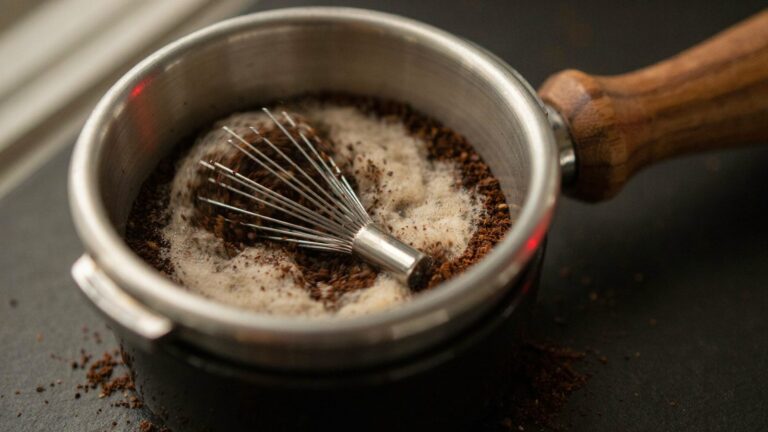
| Adjust | Weigh every dose on an espresso scale, purge a little coffee if your grinder retains grounds, and break up clumps with a WDT tool. These steps often help more than a new grinder. |
| Upgrade | Upgrade when your grinder can’t go fine enough, when one step changes your shot too much, or when you want to switch beans often without wasting coffee. |
Skip a new espresso grinder if: your machine has a grinder built in and you’re happy with it, or you use pressurized (dual-wall) baskets, which are more forgiving of the grind. Our Breville espresso machine ranking shows which machines include a grinder.
Stepped vs stepless: what it means for espresso
Stepped grinders click into fixed positions. You can always return to “setting 8” after a change, which helps if you switch beans or brew methods. The catch is that your perfect setting might fall between two clicks.
Stepless grinders turn smoothly with no clicks, so you can stop anywhere. Clive Coffee describes stepless adjustment as continuous, finer control, suited to a grinder dedicated to espresso. The catch is that returning to an exact setting means watching marks rather than counting clicks.
Step size is the real question. Clive Coffee notes that a stepped grinder with very fine steps behaves nothing like one with a few coarse clicks. That’s why the Encore ESP gives espresso its own “micro-step” range, and why 1Zpresso publishes the microns each click moves. Check how fine each step is, not just the label.
| Grinder | Adjustment type | How fine |
|---|---|---|
| Baratza Encore ESP | Stepped | Micro-steps 1–20 for espresso |
| Breville Smart Grinder Pro | Stepped | 60 settings, 1–30 for espresso, plus an adjustable upper burr |
| Baratza Sette 270 | Stepped macro plus stepless micro | 30 macro steps with a micro ring |
| Fellow Opus 2 | Stepless | Continuous |
| Eureka Mignon Specialita | Stepless | Continuous |
| DF64 Gen 2 | Stepless | Continuous |
| 1Zpresso J-Ultra | Stepped (manual) | 8 microns per click |
Single-dosing and retention
Retention is the coffee left inside a grinder after it stops. With a hopper grinder, those leftover grounds can end up in your next dose. That matters if you change grind size, switch beans or want your dose to weigh exactly what you put in.
Single-dosing means weighing the beans for one shot, pouring them in and grinding them all. Single-dose grinders are designed to leave little behind. Fellow says nearly all of a 22 g dose comes out of the Opus 2. DF64’s listing claims under 0.1 g retention for the Gen 2, though other retailers give a more cautious under 1 g.
Hopper grinders hold a bag of beans and grind on demand, often with a timer. They’re faster day to day but keep some coffee inside. Breville’s manual suggests purging the Smart Grinder Pro for 2 seconds before each use, and reviewers have measured a few grams of retention.
Neither is better for everyone. If you drink the same beans every day and want speed, a hopper and timer is convenient. If you switch beans or love precise numbers, single-dosing makes more sense.
The picks at a glance
| Grinder | Burrs | Adjustment | Feeding | Dosing | Best for |
|---|---|---|---|---|---|
| Baratza Encore ESP | 40 mm conical | Stepped, espresso micro-steps | Hopper (8 oz) | Manual on/off and pulse | Best first espresso grinder |
| Breville Smart Grinder Pro | Stainless conical (40 mm per retailers) | Stepped, 60 settings | Hopper | Timed, 0.2 s steps | Best for Breville machines |
| Fellow Opus 2 | 48 mm conical | Stepless | Single-dose (100 g) | Auto-stop | Best stepless single-dose for most |
| Baratza Sette 270 | 40 mm conical | Macro steps plus stepless micro | Hopper | 3 timed presets | Best for grinding into the portafilter |
| Eureka Mignon Specialita | 55 mm flat | Stepless | Hopper (12 oz) | Touchscreen timed doses | Best premium hopper grinder |
| DF64 Gen 2 | 64 mm flat (per retailers) | Stepless | Single-dose | Manual | Best flat-burr single-dose |
| 1Zpresso J-Ultra | 48 mm conical | 8-micron clicks | By hand, 35–40 g | Manual | Best espresso hand grinder |
Baratza Encore ESP
Best first espresso grinder
What it is: Baratza’s espresso version of its entry-level Encore, with 40 mm M2 conical burrs. Seattle Coffee Gear describes settings 1–20 as tiny steps for espresso and 21–40 as larger steps for filter brewing. It has an 8 oz hopper and a simple on/off switch and pulse button.
Why it’s on the list: Half the dial is given to espresso, which is unusual at entry level. It comes with a low-static dosing cup that fits 54 mm portafilters and an adapter ring for 58 mm, so you can grind into the cup and tip it into your basket. The quick-release cone burr makes clogs easier to clear.
Trade-offs: No timer, so you weigh your dose. It’s stepped, so you choose fixed positions. It’s a hopper grinder, though Baratza sells a single-dose hopper separately on Amazon.
Skip it if: you want programmable doses or hands-free grinding into the portafilter.
Breville Smart Grinder Pro
Best for Breville machines
What it is: Breville’s 60-setting conical burr grinder. Its US manual sets aside 1–30 for espresso and suggests starting at setting 12, or 30 with pressurized baskets. Dosing IQ grinds by time in 0.2-second steps and saves a time for each shot count. Cradles for 50–54 mm and 58 mm portafilters come in the box.
Why it’s on the list: It’s the most hands-free option here. Push the portafilter in and it grinds the stored time. If the range isn’t fine enough, Breville’s manual describes moving the removable upper burr one step finer to shift the whole range. It’s a common partner for the Bambino and other machines with no built-in grinder.
Trade-offs: Timed dosing drifts as beans age, so check with a scale. Coffee Kev’s review says it isn’t ideal for very light roasts, and reviewers report a few grams of retention, so it isn’t built for single-dosing. Breville doesn’t publish its burr size. Our Smart Grinder Pro review has the full detail.
Skip it if: you drink mostly light-roast espresso or want to single-dose.
Fellow Opus 2
Best stepless single-dose grinder for most people
What it is: Fellow’s redesigned Opus, with 48 mm conical burrs and stepless adjustment. Seattle Coffee Gear describes it as “well optimized for espresso”, and it can still grind coarse for filter. It’s a single-dose grinder with a 100 g hopper and an auto-stop that ends the grind when the beans are gone.
Why it’s on the list: It combines stepless control with low retention in one compact grinder. Fellow claims near-zero retention and includes an espresso catch cup that fits 54 mm and 58 mm portafilters, plus an anti-static ionizer. Seattle Coffee Gear lists it at 5 in wide, 10.5 in tall and 8.2 in deep.
Trade-offs: No timer or saved doses, so you weigh beans every time. Stepless means you track your setting by the marks on the collar. It’s a conical-burr all-rounder rather than a dedicated espresso flat-burr grinder like the DF64 or Specialita.
Skip it if: you’d rather fill a hopper and push a button.
Baratza Sette 270
Best for grinding straight into the portafilter
What it is: Baratza’s espresso-focused conical grinder. Its Amazon listing describes macro and micro adjustment (marketed as “270 grind settings”), 3 programmable dose buttons accurate to a tenth of a second, and a convertible holder for a portafilter or the supplied grounds bin. Retailers describe 30 macro steps, a stepless micro ring and 40 mm conical burrs.
Why it’s on the list: The Sette’s straight-through design grinds quickly. Baratza’s listing says up to 5 g per second, and a retailer gives 2.9–4.0 g per second depending on the setting. Baratza describes “minimal retention”. Three saved doses suit a household with different shot sizes, and the holder takes the portafilter so it grinds hands-free.
Trade-offs: Baratza says it handles espresso and finer manual methods such as AeroPress, V60, Chemex and some drip brewers. That means it isn’t built for French press. Retention figures vary: one retailer reports under about 2 g. It’s a hopper grinder, though Baratza sells a single-dose hopper for the Sette separately.
Skip it if: you also need a coarse French press grind, or prefer to weigh single doses.
Eureka Mignon Specialita
Best premium hopper grinder
What it is: An Italian espresso grinder with 55 mm hardened steel flat burrs and stepless adjustment. Its Amazon listing highlights a sound-insulated case, a backlit touchscreen for timed single, double and continuous grinding, and grind adjustment from below the motor mount, which keeps your setting when you take the burrs out to clean them. Seattle Coffee Gear lists a 12 oz hopper, 260 W, and a size of 5 in wide, 13.8 in tall and 5.6 in deep.
Why it’s on the list: It’s built for espresso first. Seattle Coffee Gear notes it can grind coarser but is designed for espresso, not drip. You get flat burrs, stepless control and timed doses with quieter operation in a slim body.
Trade-offs: It’s a hopper grinder, so it isn’t designed for single-dosing. Eureka makes separate single-dose Mignon models for that. Its timed doses still need a scale check. Seattle Coffee Gear lists a 20 lb shipping weight.
Skip it if: you switch beans often or want one grinder for filter coffee too.
DF64 Gen 2
Best flat-burr single-dose grinder
What it is: A single-dose flat-burr grinder with a stepless dial. Its Amazon listing describes a plasma generator (ionizer) at the exit chute to cut static, an anti-popcorn disc to stop beans bouncing, a 58 mm dosing cup and a hopper that holds 20 g on its own or 50 g with the bellows. Retailers list 64 mm flat burrs and a 250 W motor.
Why it’s on the list: It brings large flat burrs, stepless adjustment and single-dosing together. The listing claims under 0.1 g retention, and the bellows let you puff out the last grounds.
Trade-offs: Retention claims vary between listings (under 0.1 g on Amazon, under 1 g at one retailer). Retailers describe a fixed-speed brushed motor on the Gen 2, which they say is louder than DF’s variable-speed DF64V. It’s taller and heavier than the Opus 2 (one listing gives 250 × 135 × 305 mm and 7.2 kg).
Skip it if: you want a hopper and timer, or prefer a quieter grinder.
1Zpresso J-Ultra
Best espresso hand grinder
What it is: A manual grinder designed for espresso. 1Zpresso lists 48 mm burrs, an external dial moving 8 microns per click, a 35–40 g capacity and a weight of 670 g. Its Amazon listing adds a coated burr, a magnetic catch cup, a foldable handle and a travel case.
Why it’s on the list: 8 microns per click is very fine control, which is what espresso needs. It’s quiet, cordless and small enough to store in a drawer or take on a trip. Our best portable espresso maker guide pairs it with travel brewers.
Trade-offs: You’ll grind every shot by hand, which takes effort with dense, light-roast beans. It’s built for espresso fineness. 1Zpresso’s own range lists the K-Ultra as its all-rounder, which we cover in our best coffee grinder guide.
Skip it if: you make several drinks back to back.
How to choose an espresso grinder
1. Check your machine and basket. If you use pressurized (dual-wall) baskets, almost any espresso-capable burr grinder will do. Breville suggests starting the Smart Grinder Pro at setting 30 for them. With standard baskets, fine adjustment matters much more. Our Breville portafilter size guide helps if you’re matching a dosing cup or cradle.
2. Pick a workflow. Hopper and timer (Smart Grinder Pro, Sette 270, Specialita) is fastest for one coffee every day. Single-dose (Opus 2, DF64 Gen 2, J-Ultra) suits people who weigh everything or switch beans.
3. Decide stepped or stepless. Stepless gives the finest control. Fine-stepped grinders like the Encore ESP and J-Ultra are easier to reset.
4. Think about roast level. Reviewers note the Smart Grinder Pro can struggle with very light-roast espresso. If you drink light roasts, look at grinders with finer control and stronger motors, and plan for some trial and error. Our espresso beans guide explains roast levels.
5. Plan the rest of your prep. A grinder works best with a distribution tool and a scale. If you’re new to dialing in, our how to make espresso at home guide walks through dose, yield and time.
Dialing in a new espresso grinder
A new grinder rarely lands on the right setting straight away. Our espresso grind size guide explains the basics. A simple routine helps, whichever pick you choose.
- Start where the maker suggests. Breville’s manual suggests setting 12 on the Smart Grinder Pro for standard baskets. Other makers print a grind guide under the lid (the Opus 2) or describe an espresso range (the Encore ESP’s 1–20).
- Fix your dose and ratio. Counter Culture’s published espresso recipe is a good reference: 18 g of coffee in, a 1:2 ratio (about 36 g out).
- Change one thing at a time. Counter Culture suggests aiming for roughly 25 to 35 seconds. If the shot runs faster, grind finer. If it runs slower, grind coarser.
- Taste, then adjust again. Counter Culture says a sour shot usually means grind finer or stretch the ratio, and a harsh or bitter shot means grind coarser or shorten it.
- Write your setting down. On a stepless grinder, note the mark on the collar. On a stepped grinder, note the number. When you open a new bag, start there.
Expect to adjust again as beans age, and whenever you switch to a different roast. If you can’t go fine enough at the finest setting, check the maker’s calibration advice. Breville describes moving the Smart Grinder Pro’s upper burr, for example.
FAQ
Do I need a special grinder for espresso?
Yes, in most cases. Espresso needs a fine, even grind and small adjustment steps. Many filter grinders, like the Fellow Ode Gen 2, aren’t designed for it. Look for a burr grinder whose maker lists espresso and publishes its espresso range.
Is stepless better than stepped for espresso?
Not automatically. Stepless lets you stop anywhere, which helps with fine tuning. A stepped grinder with very small steps, such as the Encore ESP’s micro-steps or the J-Ultra’s 8-micron clicks, can be precise enough and is easier to reset.
What is single-dosing?
Weighing the beans for one shot and grinding all of them, rather than grinding from a full hopper. It reduces leftover coffee mixing into your next dose and makes switching beans easy. The Opus 2, DF64 Gen 2 and J-Ultra are built for it.
Is the Niche Zero available on Amazon?
We couldn’t find a Niche Zero listing on Amazon US as of October 2026. For a single-dose alternative on Amazon, look at the DF64 Gen 2 or Fellow Opus 2.
Can a hand grinder make good espresso?
A hand grinder designed for espresso can, if it adjusts finely enough. 1Zpresso designed the J-Ultra for espresso, with 8-micron steps. The trade-off is time and effort per shot.
Related guides
Sources
- Clive Coffee, Stepped vs stepless grinder: how to choose
- Seattle Coffee Gear, Baratza Encore ESP
- Seattle Coffee Gear, Fellow Opus Gen 2
- Seattle Coffee Gear, Eureka Mignon Specialita
More sources (8)
- Whole Latte Love, Fellow Opus 2
- Clive Coffee, Baratza Sette 270
- Prima Coffee, Baratza Sette 270 video overview
- Sigma Coffee, DF64 Gen 2
- 1Zpresso, J-Ultra
- Breville US, Smart Grinder Pro instruction book
- Coffee Kev (coffeeblog.co.uk), Smart Grinder Pro review
- Counter Culture Coffee, espresso brewing information